
Practice · 2026 · 7 min read
Notes on Doing Quantitative Fieldwork Across Five Countries
Survey instruments do not travel as cleanly as the analysis plan suggests. Some field notes on translation, trust, and what the data cannot record.
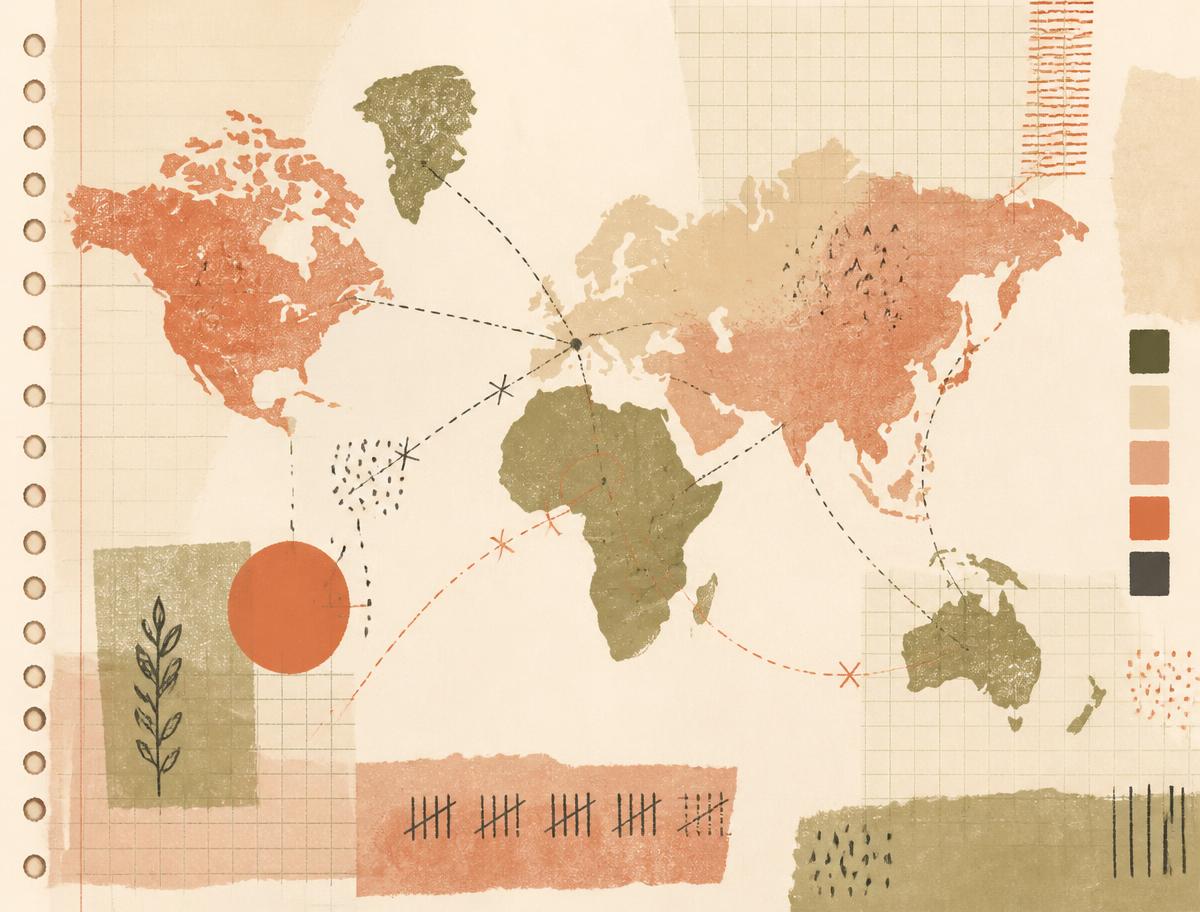
I have worked on studies in the United States, India, Côte d'Ivoire, Uruguay and across Pacific Island systems, plus two years teaching in Hunan Province before any of that. The statistical methods have been broadly the same. Almost nothing else has been.
The first thing that stops travelling is the instrument. A question about household decision making that reads as neutral in one setting reads as an accusation in another. A scale validated on one population can produce a strange, flattened distribution somewhere else, and it is rarely obvious from the codebook whether that flatness is measurement or reality. The only reliable way to find out is to sit with enumerators after a pilot day and ask which questions people hesitated on.
The second thing is time. Field schedules are shaped by harvests, school calendars, holidays, weather, and the working lives of the people being asked to give up an hour. Attrition patterns are not random, and they are not always documented in a way that a later analyst can reconstruct. Writing down why a household was not reached is one of the highest value, lowest status tasks in a study.
The third thing is trust, which is the part statistics is worst at representing. Response quality depends on whether the person asking has been in the community before, whether the last research team came back with anything, and whether the questions feel like they lead somewhere. Studies that treat data collection as a logistics problem tend to get thinner data than studies that treat it as a relationship.
What I take from this is not that comparative quantitative work is impossible. It is that the credibility of a cross context finding rests on unglamorous decisions made months before the model is fitted. The analysis is where the argument becomes visible. The fieldwork is where it becomes true or not.
Written by
Anahita Kumar
Quantitative researcher working across education, human development, statistics and policy. For collaborations or consulting, write to kanahita@upenn.edu.